Walk into any gym in India and you will see two types of belts: thick, uniform-width leather belts with levers, and thinner tapered belts that are wide in the back and narrow in the front. They look completely different — because they are built for completely different purposes.
The Powerlifting Belt
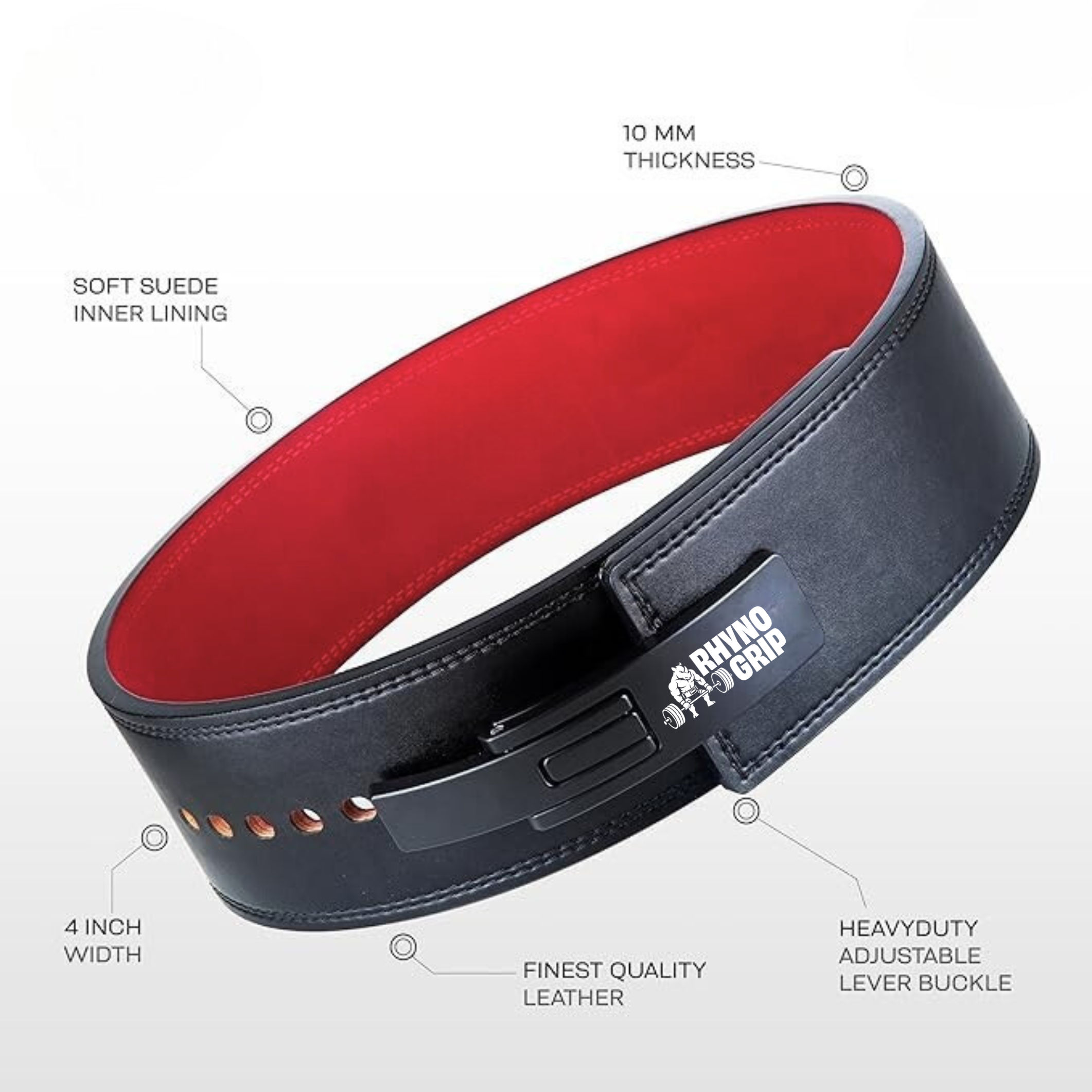
A powerlifting belt is 4 inches (10 cm) wide all the way around. It is the same width in the front, sides, and back. This uniform width is critical because the belt's job is to give your core something to brace against in every direction — not just in the back.
Key features:
- Uniform 4-inch width — equal support all around the torso
- 10mm or 13mm thickness — rigid enough to resist heavy loads
- Lever or prong closure — secure lockdown with no slipping
- Genuine leather construction — moulds to your body, lasts years
- Flat, stiff profile — does not fold or collapse under pressure
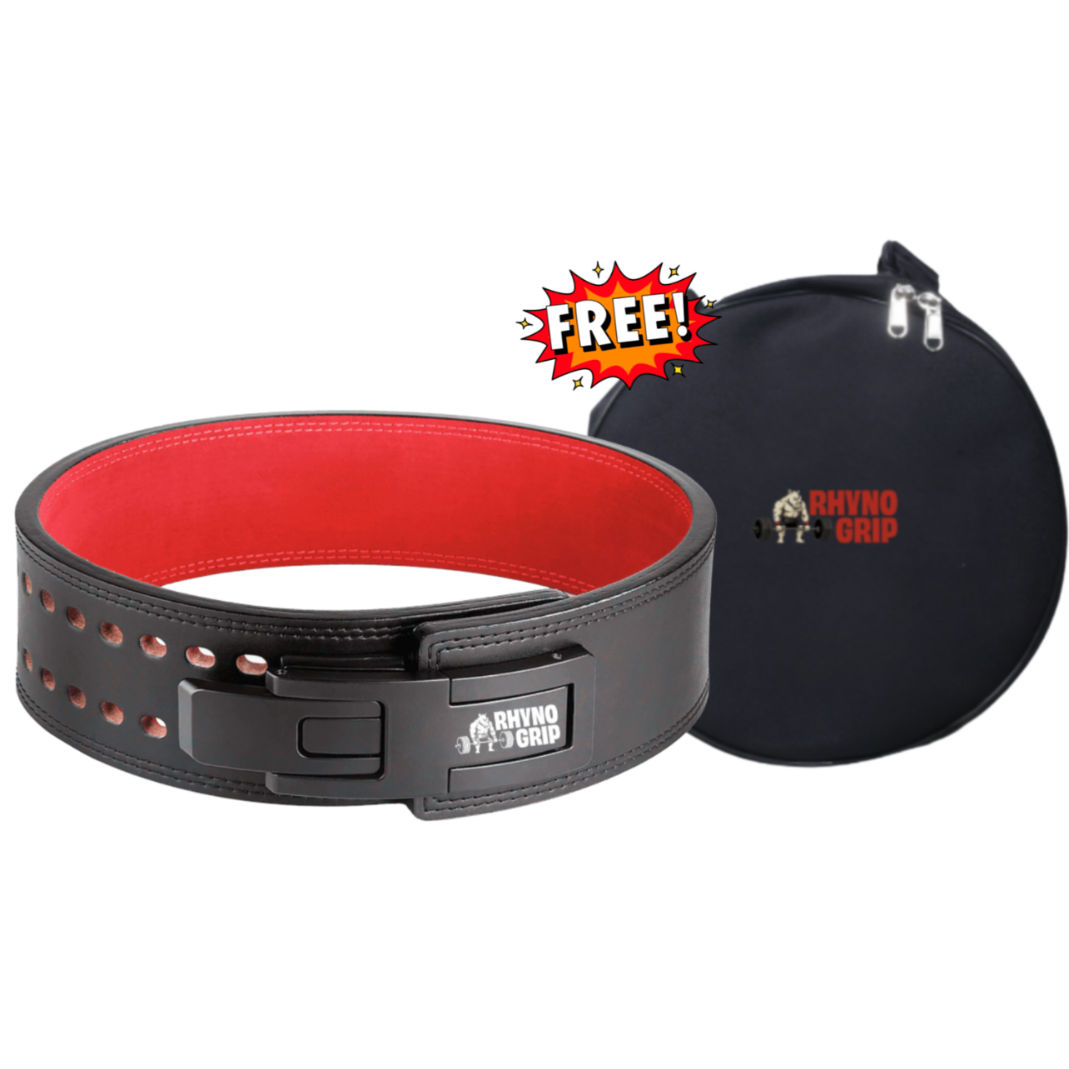
This is the belt you see at powerlifting meets. Every serious squatter and deadlifter owns one. The RhynoGrip 10mm Lever Belt and 13mm Lever Belt are textbook examples.
The Bodybuilding Belt
A bodybuilding belt (also called a tapered belt or contoured belt) is wide in the back (typically 4–6 inches) and narrows to 2–3 inches in the front. It is usually thinner (4–6mm) and made from lighter materials like nylon or thin leather.
Key features:
- Tapered design — wide back, narrow front
- Thinner and more flexible — easier to move in
- Velcro or single-prong closure — quick to put on and take off
- Lighter weight — less restrictive during high-rep sets
The Critical Difference: How They Work
A powerlifting belt works by increasing intra-abdominal pressure (IAP). When you take a deep belly breath and brace hard, your core pushes outward against the belt in 360 degrees. The belt resists this expansion, creating a hydraulic effect that stabilises your spine. The uniform width ensures equal resistance all around.
A bodybuilding belt primarily supports the lower back. The wide rear panel acts like a lumbar brace, while the narrow front allows you to bend forward freely. It provides some IAP benefit but significantly less than a powerlifting belt because there is less surface area in the front for your abs to push against.
Which One Should You Buy?
Buy a powerlifting belt if:
- You squat, deadlift, or overhead press heavy (above bodyweight)
- You train for strength or compete in powerlifting
- You want maximum core stability and spine protection
- You understand how to brace properly
Buy a bodybuilding belt if:
- You primarily do isolation work and machine exercises
- You need a belt for light support during high-rep sets
- You value freedom of movement over maximum rigidity
- You do a lot of seated exercises where a thick belt digs into your hips
The Honest Answer for Most Indian Gym-Goers
If you are reading this article, you probably care about getting stronger. And if you care about getting stronger, a powerlifting-style lever belt is the better investment 9 times out of 10. Here is why:
- It does everything a bodybuilding belt does, plus more
- It lasts a lifetime (genuine leather vs nylon that frays)
- It actually makes you stronger by enabling proper bracing
- You will never outgrow it — the same belt works from 100kg to 300kg squats
The RhynoGrip belt collection is built exclusively for lifters who take their training seriously. Competition-grade specs, genuine leather, and priced for Indian athletes. Check the sizing guide and pick your weapon.