You have been lifting for a few months. Your squat is creeping past bodyweight. And every serious lifter in the gym is wearing a lever belt. Time to get one — but the options are overwhelming. 10mm or 13mm? Single or double lever? ₹2,000 belts on Amazon or ₹5,000+ from a dedicated brand? This guide cuts through the noise.
When Should a Beginner Buy a Lever Belt?
You do not need a belt on day one. The general recommendation is to train beltless for 3–6 months until you can squat and deadlift with proper form. Once your working sets are consistently above your bodyweight, a belt becomes a genuine performance tool — not a crutch.
Signs you are ready:
- Your squat or deadlift is above 1x bodyweight for reps
- You understand how to brace properly
- You train consistently 3–4 days per week
- You feel limited by core stability, not by strength
Why a Lever Belt Over a Prong Belt?
Prong belts are fine, but lever belts have one killer advantage: consistency. Once you set the lever to your preferred tightness, every single session gives you the exact same fit. No fumbling with prong holes between sets. No variation in tightness because you were in a rush. For a beginner building habits, this consistency is invaluable.
10mm vs 13mm: The Beginner Answer
For 95% of beginners, a 10mm lever belt is the right choice. Here is why:
- Break-in time: A 10mm belt breaks in within 3–5 sessions. A 13mm belt can take 10–15 sessions of uncomfortable wearing before it moulds to your body
- Comfort: The 10mm is stiff enough for serious loads (200kg+ squats) while still being comfortable for volume work
- Versatility: Works for squats, deadlifts, overhead press, and even heavy rows
- Price: Generally ₹500–1,000 cheaper than 13mm options
Save the 13mm belt for when you are squatting 200kg+ and need maximum rigidity.
Single Lever vs Double Lever
A single lever belt uses one clamp. Quick to open and close. Perfect for most lifters. A double lever belt adds a second clamp for extra lockdown — preferred by competitive powerlifters handling very heavy loads. As a beginner, single lever is all you need.
What to Look For in a Quality Belt
Not all lever belts are created equal. Here is your checklist:
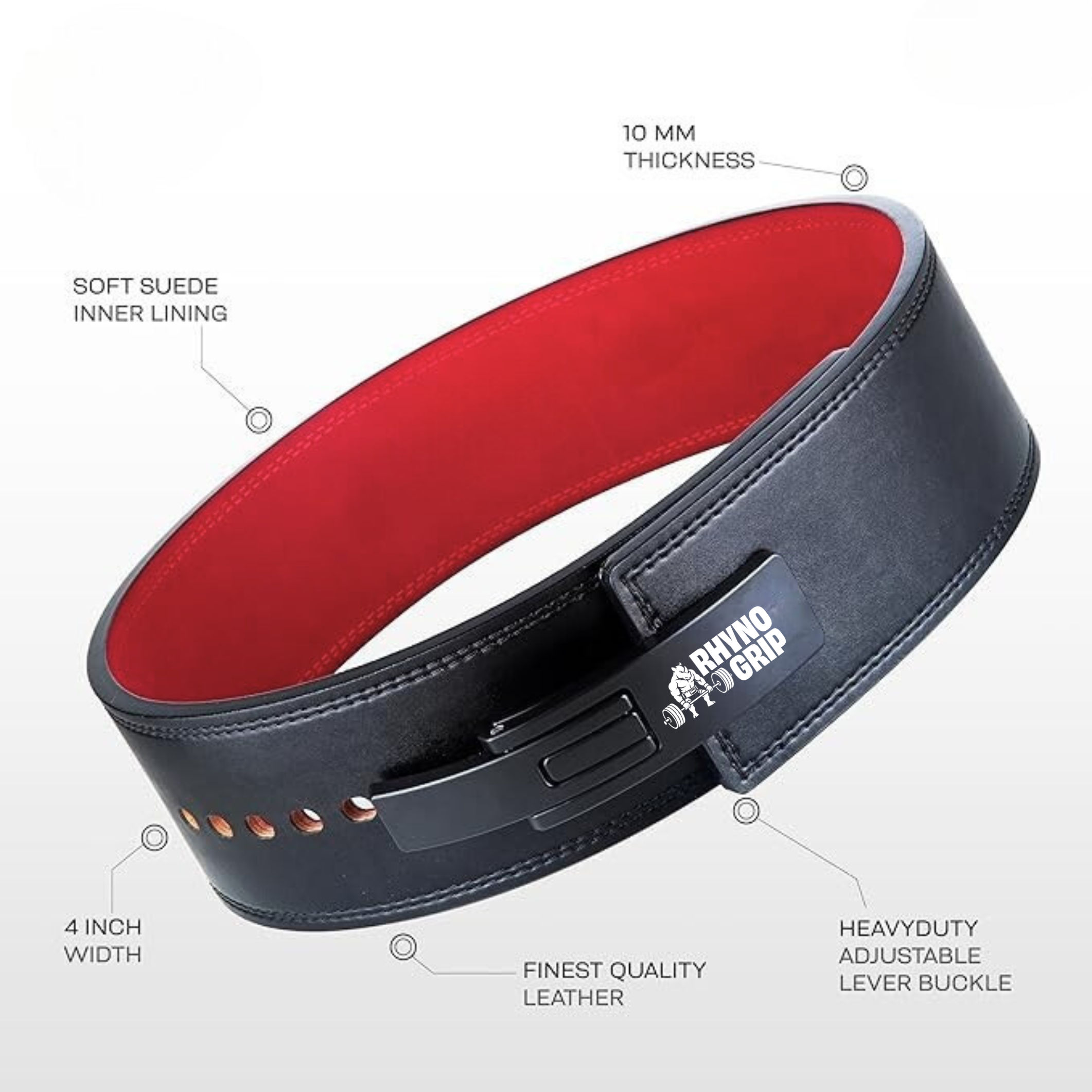
- Material: 100% genuine leather. Not bonded leather, not PU leather, not suede-only. Genuine leather moulds to your body and lasts a lifetime
- Width: 4 inches (10cm) uniform width all the way around. Tapered belts are for bodybuilding, not powerlifting
- Lever quality: Stainless steel or heavy-duty metal. The lever should click shut with zero play or wobble
- Stitching: Reinforced double stitching on stress points. Single stitching will eventually give way under heavy use
- Edges: Bevelled or rounded edges that will not dig into your ribs or hips
Avoid These Common Mistakes
- Buying too cheap: Sub-₹2,000 belts on Amazon use bonded leather that cracks within months. Genuine leather belts start around ₹3,500–5,000
- Buying too thick: A 13mm belt you cannot break in is worse than no belt at all
- Wrong size: Measure around your belly button, not your pant size. Use the sizing guide to get it right
- Wearing it wrong: The belt goes on your core (around the navel), not on your hips like a fashion belt
Our Recommendation for Beginners
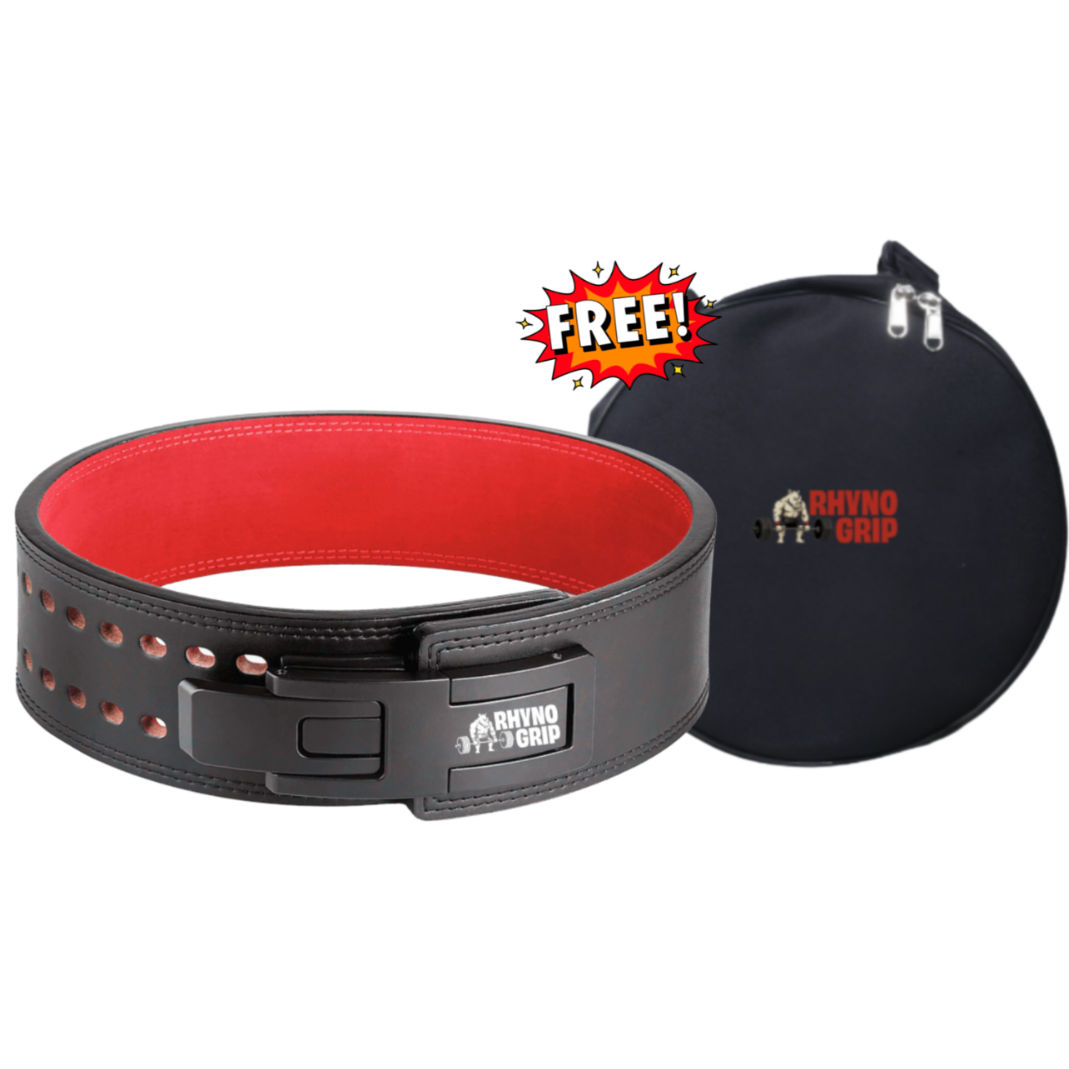
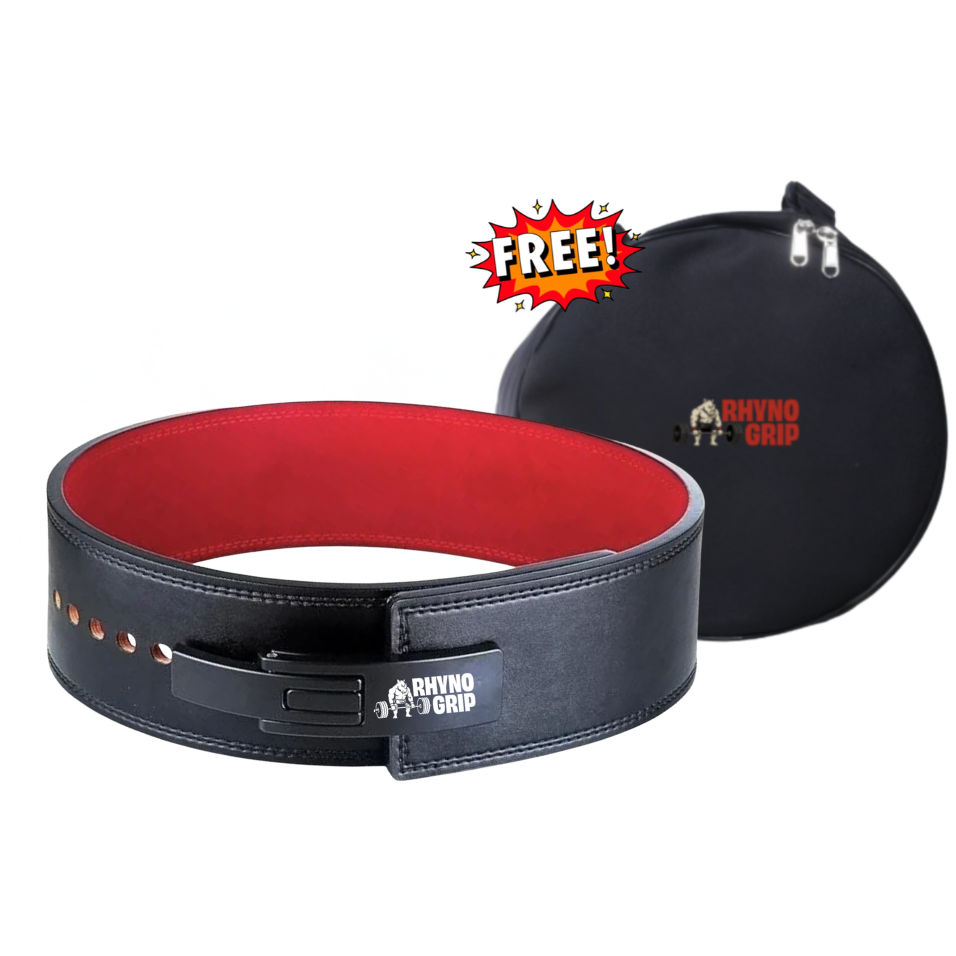
The RhynoGrip 10mm Single Lever Belt is purpose-built for this exact scenario. 100% genuine leather, competition-grade 4-inch width, stainless steel lever, and priced fairly for Indian lifters. It will be the last beginner belt you ever need — and many lifters never outgrow it.
Pair it with our Lifting Liquid Chalk for deadlift sessions and you have got a setup that will carry you from your first plate to your first competition.