If you have spent any time around a powerlifting platform, you have noticed something: the overwhelming majority of competitive lifters wear lever belts. This is not a trend -- it is a performance decision backed by biomechanics, convenience, and consistency.
In this guide we cover everything you need to know before investing in a lever belt, whether you are a first-time buyer or upgrading from a prong belt you have outgrown.
What Makes a Lever Belt Different?
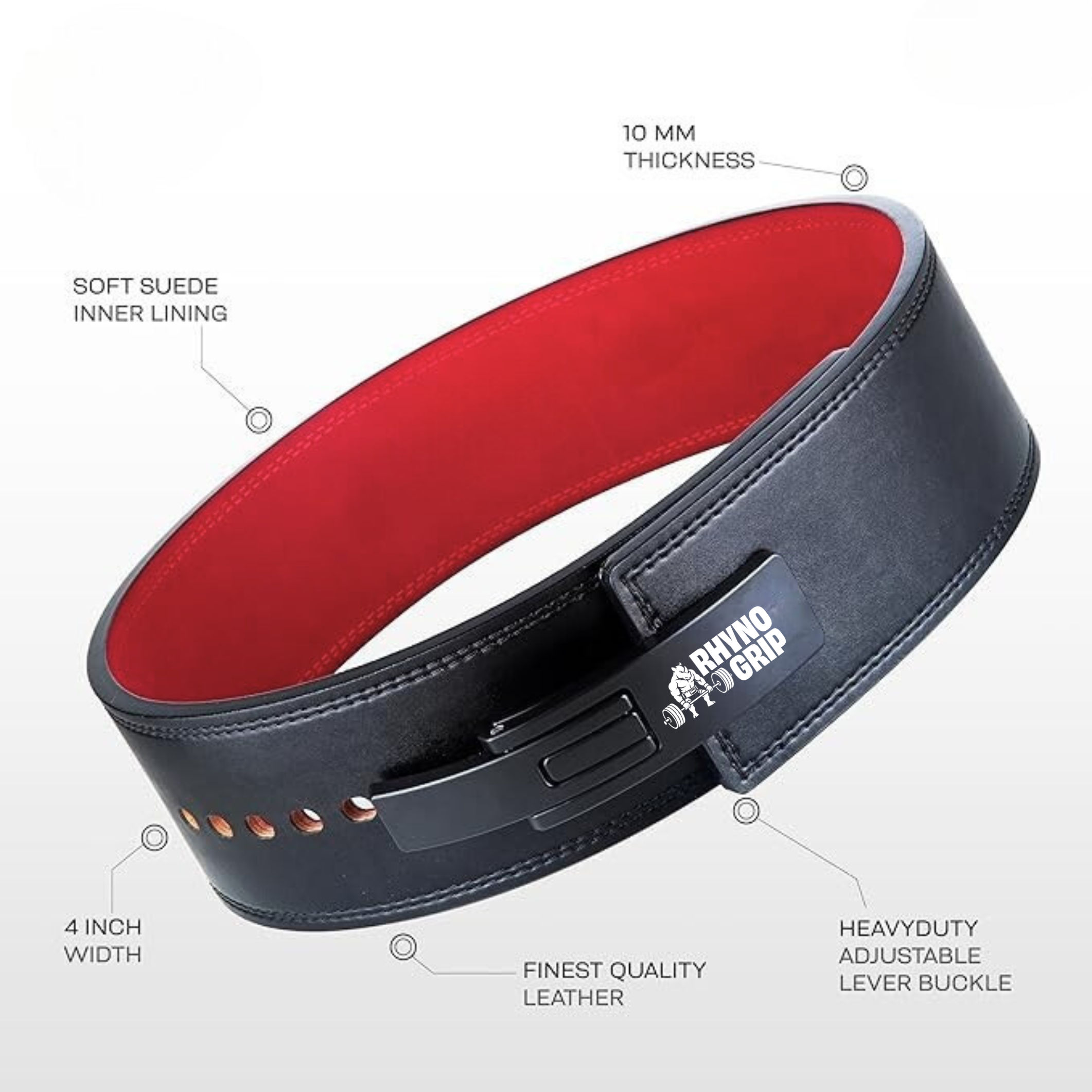
A lever belt uses a metal clamp mechanism instead of a prong-and-hole system. You set the lever to your preferred tightness once, and from that point on, every single time you buckle up, you get exactly the same tightness. No fumbling with holes, no variation between sets.
This consistency matters more than most lifters realize. When you brace against a belt for a heavy squat, your body learns to generate intra-abdominal pressure against a specific resistance. A lever belt gives you that identical resistance every single rep, every single session.
10mm vs 13mm Lever Belts
The thickness of your belt determines its rigidity and break-in time:
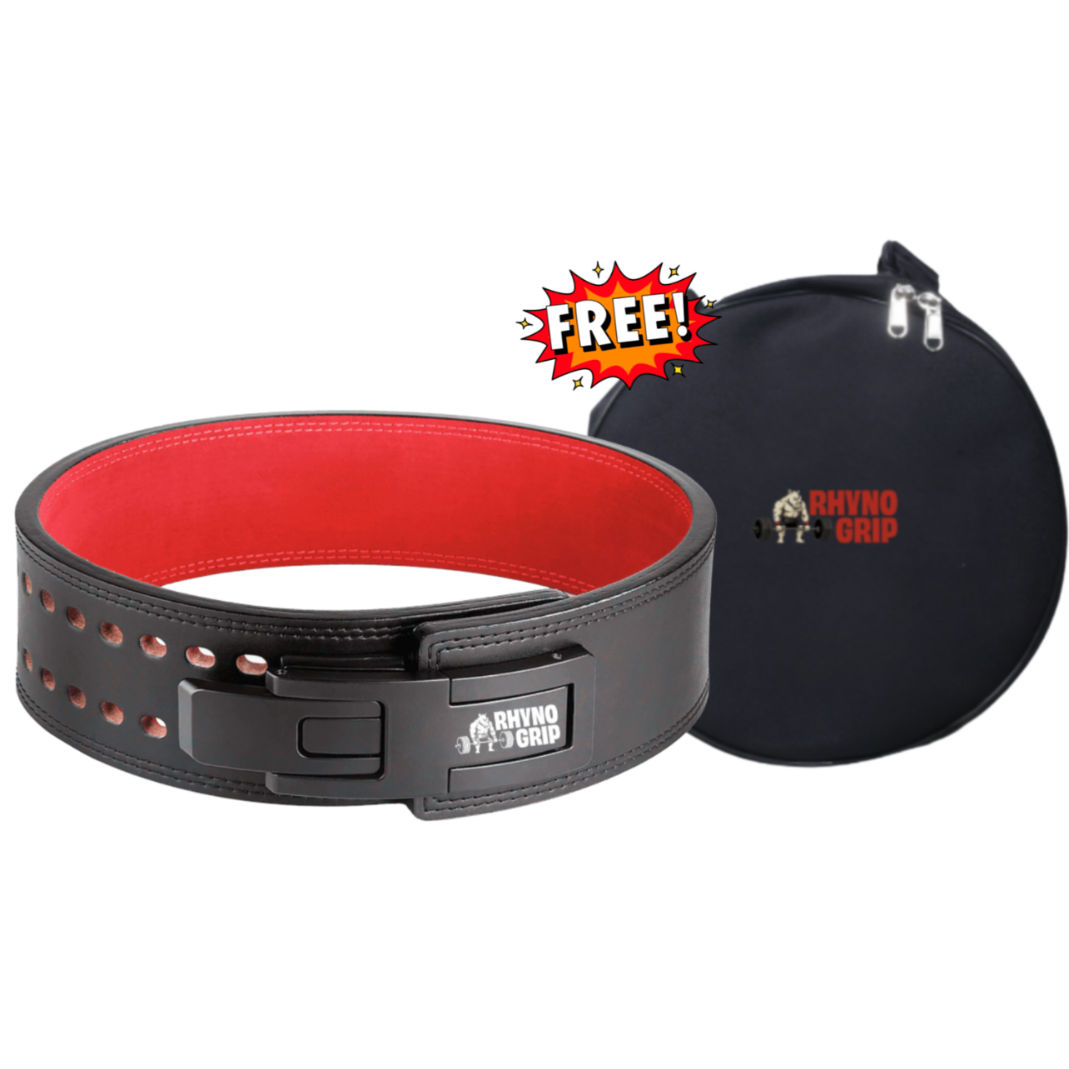
- 10mm lever belt -- Ideal for most lifters. Provides excellent support while being comfortable enough for high-volume training. Breaks in within 3 to 5 sessions. Perfect if you squat, bench, and deadlift in the same belt. Check out the RhynoGrip 10mm Single Lever Belt for a competition-ready option.
- 13mm lever belt -- Maximum rigidity for maximum loads. Preferred by super-heavyweight lifters and anyone handling 250kg+ squats. Takes 10 to 15 sessions to fully break in. The RhynoGrip 13mm Double Lever Belt is built to IPF standards with double-lever security.
How to Size a Lever Belt
This is where most first-time buyers make mistakes. Measure around your navel while standing relaxed -- not at your waist, not at your hips. Use a soft measuring tape. Your belly button circumference is your true belt size because that is exactly where the belt sits during heavy lifts.
For lever belts specifically, the lever mechanism has about 3cm of adjustability. If you are between sizes, size up. You can always tighten a lever belt by repositioning the lever plate, but you cannot extend the leather.
Breaking in Your Lever Belt
A new leather lever belt is stiff. Here is the fastest way to break it in:
- Roll the belt up tightly and secure it with a band overnight
- Wear it buckled at training tightness while doing mobility work before your session
- Use it for every working set -- including warm-ups above 60% of your max
- After 5 to 8 sessions, the leather will conform to your body shape
When to Use Your Lever Belt
A common mistake is belting up too early or too late. Research shows that a belt is most beneficial when loads exceed 80% of your one-rep max. For warm-up sets, train beltless to build core strength. For working sets, buckle up and brace hard.
Combine your lever belt with proper lifting chalk for a complete competition setup -- the belt handles bracing while chalk ensures your grip never fails.
Lever Belt vs Prong Belt: The Final Verdict
Prong belts are not bad -- they are just slower and less consistent. If you compete or train seriously more than three times per week, a lever belt pays for itself in convenience alone. The one-click buckling saves time between sets and eliminates the frustration of wrestling with a stiff prong during a heavy session.
Browse the full RhynoGrip weightlifting belt collection to find the right belt for your training level and goals.